Key Points
- Tameside Council has launched a public consultation inviting Ashton-under-Lyne residents to help shape the future of Ashton Town Hall, a Grade II-listed heritage building.
- The consultation forms part of a broader town centre regeneration strategy aiming to revitalise the area.
- Residents can provide feedback via an online survey, available until 26 April 2026.
- Public drop-in events are scheduled at Ashton Town Hall on 21 March 2026 (1pm-7pm) and 28 March 2026 (10am-4pm).
- The council seeks views on potential future uses for the town hall, including community, commercial, or mixed purposes.
- Ashton Town Hall, opened in 1840, currently hosts council services, events, and markets but faces challenges amid changing public needs.
- Consultation responses will inform a final decision expected later in 2026.
- Cllr Jack Dodd, Tameside Council’s Executive Member for Inclusive Economy and Regeneration, emphasised the importance of resident input.
- The initiative aligns with Tameside’s wider £25 million Levelling Up Fund investment in Ashton town centre.
- No final decisions have been made; all options remain open based on public feedback.
- Background reports and historical context on the town hall are available on the council’s website.
- Similar consultations have successfully shaped other local projects, such as Ashton Market regeneration.
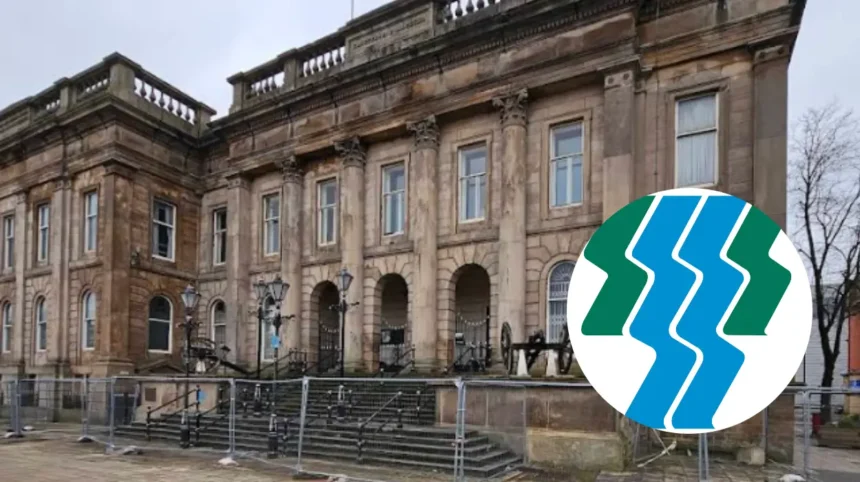
Ashton-under-Lyne (Manchester Mirror) March 19, 2026 – Tameside Council is calling on Ashton-under-Lyne residents to participate in a vital public consultation to determine the future of the iconic Ashton Town Hall. This Grade II-listed building, a cornerstone of local heritage since 1840, faces potential transformation as part of ambitious town centre regeneration plans. Feedback is sought through surveys and drop-in sessions until late April, ensuring community voices guide decisions on its role in modern civic life.
- Key Points
- Who Launched the Consultation on Ashton Town Hall?
- What Are the Key Dates and Events for Participation?
- Why Is the Future of Ashton Town Hall Under Review?
- How Does This Fit into Tameside’s Regeneration Plans?
- What Potential Uses Are Being Considered for the Town Hall?
- What Is the Historical Significance of Ashton Town Hall?
- How Can Residents Provide Feedback Beyond Events?
- When Will Decisions Be Made on the Town Hall’s Future?
Who Launched the Consultation on Ashton Town Hall?
Tameside Council initiated the consultation as reported by Gerald Slevin of Tameside Correspondent. The process targets residents, businesses, and visitors to gather comprehensive input on the town hall’s future uses. Cllr Jack Dodd, Tameside Council’s Executive Member for Inclusive Economy and Regeneration, stated: “Ashton Town Hall is a much-loved building at the heart of our town centre and we want to hear from residents about how they would like to see it used in the future.”
The council’s announcement highlights the building’s historical significance, noting it was officially opened on 7 October 1840 by the Right Honourable Lord Viscount Castlereagh. Currently, it accommodates council customer services, hosts events, markets, and community activities. As reported by Gerald Slevin of Tameside Correspondent, the consultation is explicitly not predetermined, with Cllr Dodd adding: “We have not made any decisions on the building’s future and want to engage with our communities to help shape our plans.”
What Are the Key Dates and Events for Participation?
Residents have multiple opportunities to engage, with specific dates outlined in the council’s release. An online survey is live now and closes on 26 April 2026, accessible via the Tameside Council website. Two public drop-in events are set: Saturday 21 March 2026 from 1pm to 7pm, and Saturday 28 March 2026 from 10am to 4pm, both at Ashton Town Hall.
These sessions allow direct interaction with council officers, as emphasised in the original coverage. Gerald Slevin of Tameside Correspondent detailed: “Two public drop-in events will be held at Ashton Town Hall – on Saturday 21 March (1pm-7pm) and Saturday 28 March (10am-4pm).” Additional feedback methods include emailing the council or requesting paper copies of the survey by phone.
Why Is the Future of Ashton Town Hall Under Review?
The review stems from evolving community needs and the building’s role in a declining traditional use context. Tameside Council views the town hall as central to town centre vitality amid broader regeneration efforts. It forms part of the £25 million Levelling Up Fund allocation for Ashton, funding projects like market enhancements and public realm improvements.
As Gerald Slevin reported for Tameside Correspondent, the council recognises challenges: “Like many town halls up and down the country, Ashton Town Hall has faced challenges in recent years as the way people access council services has changed.” Cllr Dodd reinforced this, noting the building’s ongoing value but need for adaptation.
How Does This Fit into Tameside’s Regeneration Plans?
This consultation integrates with Tameside’s comprehensive town centre masterplan. Previous phases addressed Ashton Market, with phase two now extending to the town hall and surrounding areas. The strategy aims to boost footfall, support businesses, and preserve heritage while introducing modern facilities.
Background documents on the council’s site provide context, including the Ashton Town Centre Masterplan and heritage assessments. Gerald Slevin of Tameside Correspondent noted: “The town hall consultation is part of Phase 2 of the council’s town centre regeneration strategy.” Successful precedents include community-led market revitalisation, demonstrating effective public involvement.
What Potential Uses Are Being Considered for the Town Hall?
Options remain open, with residents asked to suggest ideas ranging from continued civic use to commercial lettings, cultural hubs, or hybrid models. The survey probes preferences on retaining council services, event spaces, or new revenue-generating functions. No proposals are favoured in advance, ensuring neutrality.
Cllr Dodd, as quoted by Gerald Slevin in Tameside Correspondent, prioritised community-led outcomes: “Your views are incredibly important in helping us to shape the way forward.” Historical uses—like housing the former Ashton Town Council until 1974—are referenced to inform discussions on sustainable futures.
What Is the Historical Significance of Ashton Town Hall?
Constructed in the neoclassical style, the town hall symbolises Ashton-under-Lyne’s industrial heritage. Key milestones include its 1840 opening and role in local governance until municipal reorganisation. It survived wartime damage and continues as a venue for markets and performances.
Gerald Slevin’s Tameside Correspondent article cites architectural details: “The building was officially opened on 7 October 1840 by the Right Honourable Lord Viscount Castlereagh.” Grade II listing protects its features, balancing preservation with adaptation in regeneration talks.
How Can Residents Provide Feedback Beyond Events?
Beyond drop-ins, the primary channel is the online survey at tameside.gov.uk/ashtontownhall.Businesses and groups can submit collective responses.
The council commits to analysing all input transparently, with results published post-consultation. As per Tameside Correspondent, this inclusive approach mirrors prior successes in local planning.
When Will Decisions Be Made on the Town Hall’s Future?
No timeline is fixed, but outcomes will inform 2026 planning submissions. Consultation closes April 26,2026, followed by analysis and reporting. Final cabinet decisions are anticipated later in the year, aligning with Levelling Up deadlines.
Gerald Slevin reported: “Responses to the consultation will help inform future decision-making on the future of the building.” Residents are urged to act promptly to influence this landmark’s next chapter.
This comprehensive engagement underscores Tameside Council’s commitment to democratic regeneration, with Ashton Town Hall poised for a resident-defined renaissance.