Fallowfield sits as a dynamic yet strained suburb just three miles south of Manchester city centre, historically part of Lancashire before its incorporation into the city in 1895 and full absorption by 1904. This area has long balanced residential calm with urban energy, but persistent Fallowfield issues like housing pressures and infrastructure strain have shaped its identity. As home to thousands of students from the University of Manchester and Manchester Metropolitan University, it grapples with transient populations that amplify everyday problems.
- Historical Roots of Fallowfield’s Development
- Housing Crisis and Overcrowding Pressures
- Student Influence on Local Dynamics
- Traffic Congestion and Transport Woes
- Environmental Concerns and Green Space Strain
- Crime Rates and Safety Perceptions
- Economic Decline and Commercial Shifts
- Community Fragmentation and Social Isolation
- Health and Wellbeing Challenges
- Infrastructure Decay and Maintenance Backlog
- Council Initiatives and Policy Responses
- Regeneration Projects on the Horizon
- Resident Voices and Grassroots Efforts
- Sustainable Future for Fallowfield
- Pathways to Resolution
These challenges persist evergreen, unaffected by fleeting trends, making them ripe for ongoing discussion among locals and newcomers alike. Understanding Fallowfield issues requires peeling back layers of history, demographics, and modern urban planning to appreciate why solutions remain elusive yet vital.
Historical Roots of Fallowfield’s Development
Fallowfield’s story begins in rural tranquillity, evolving from farmland into a Victorian-era commuter haven thanks to the arrival of tramlines and railways in the late 19th century. By the early 1900s, its lower rates compared to central Manchester drew families, fostering a sense of community amid tree-lined streets like Wilbraham Road and Wilmslow Road, which bisect the district. This growth mirrored Manchester’s industrial boom, but early signs of strain emerged with population surges.
Post-World War II reconstruction accelerated change, introducing high-rise flats like the notorious Owens Park Tower, a 1960s student residence that symbolized modernist ambition but later epitomized decay. Radical history underscores resilience; in the 1930s, Fallowfield hosted peace movements, including the Manchester and Salford Peace Council with officers on Granville Road, reflecting anti-war sentiments amid global tensions. These historical threads reveal how Fallowfield issues today echo past tensions between progress and preservation.
Housing Crisis and Overcrowding Pressures
Manchester’s housing market hits Fallowfield hardest, where demand from over 40,000 students collides with limited supply, driving up rents and forcing substandard living conditions. Landlords convert family homes into multiple-occupancy houses, diluting neighbourhood cohesion and sparking resident complaints about noise and waste. Official data from Manchester City Council highlights how Fallowfield’s urban density exacerbates this, with transient tenancies averaging just nine months.
This overcrowding fuels a cycle of neglect; properties fall into disrepair as short-term renters prioritise affordability over maintenance. Community reports describe “ghost streets” where empty properties await student influxes, contrasting sharply with families priced out to Withington or Didsbury. Addressing Fallowfield issues here demands stricter licensing for houses in multiple occupation (HMOs) and incentives for family housing, yet enforcement lags behind need.
Student Influence on Local Dynamics
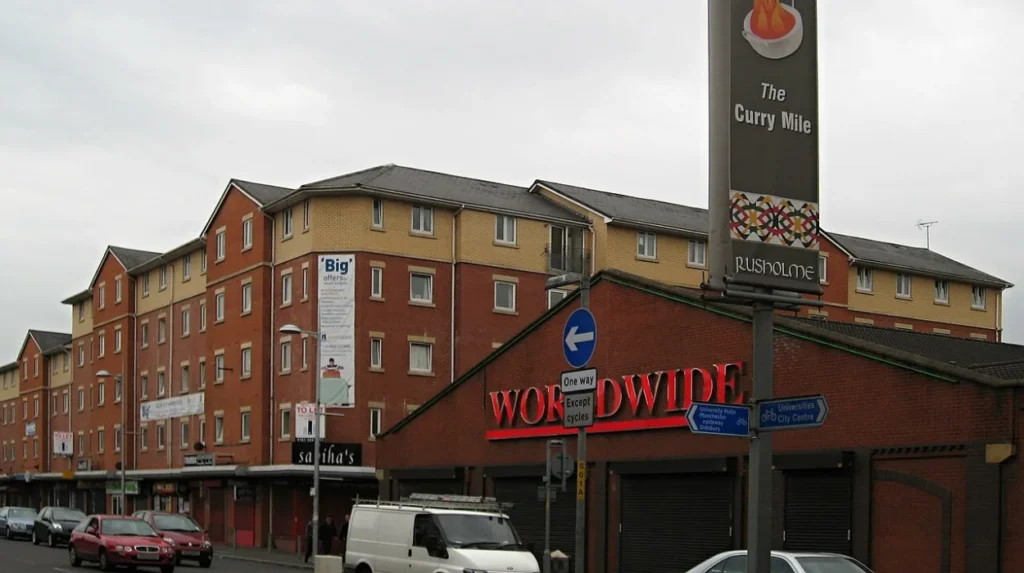
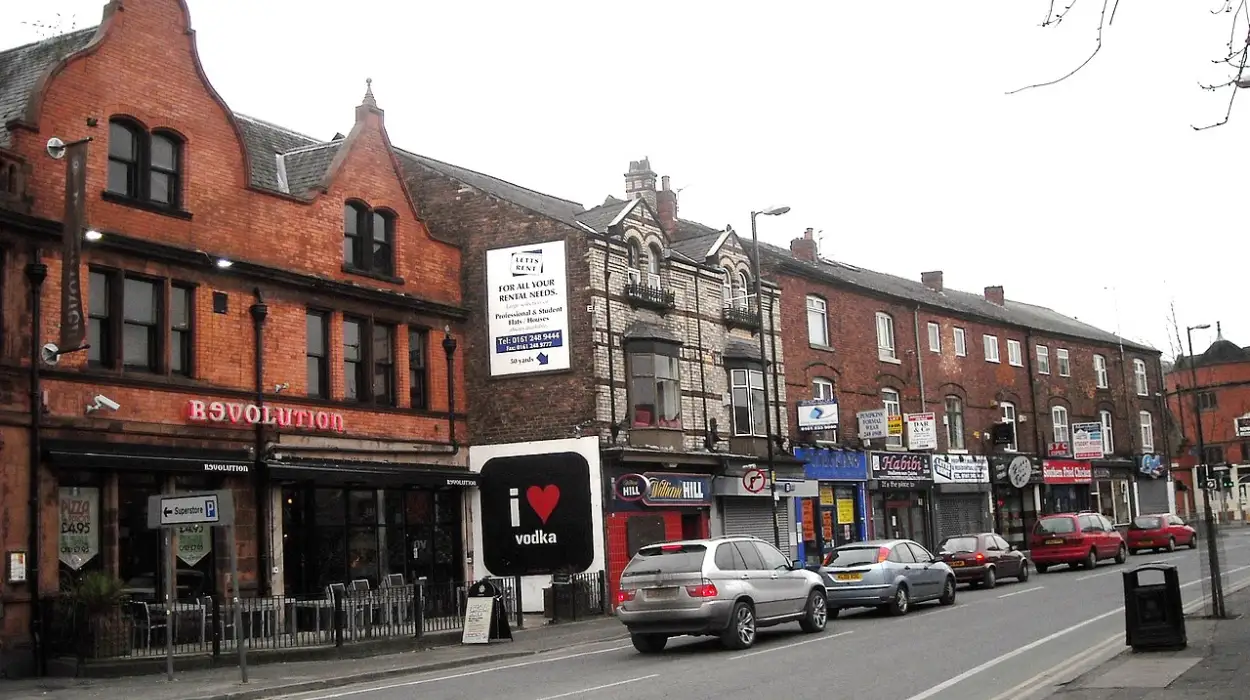
Fallowfield thrives as a student epicentre, with Wilmslow Road’s curry houses and bars pulsing during term time, but this vibrancy breeds friction. Noise from late-night parties disrupts residents, while seasonal population swings—peaking at 20,000 students—overwhelm bins and public spaces. Local forums buzz with tales of anti-social behaviour, from litter-strewn parks to vandalism at bus stops, painting a picture of a suburb losing its residential soul.
Yet students inject economic lifeblood; without them, shuttered shops would multiply. Balancing this duality requires university-led initiatives, like the University of Manchester’s community wardens, which patrol hotspots but struggle against sheer numbers. Fallowfield issues tied to students underscore a broader urban dilemma: harnessing youthful energy without eroding community fabric.
Traffic Congestion and Transport Woes
Wilmslow Road, Fallowfield’s arterial spine, chokes daily under commuter and student traffic, worsened by Metrolink construction delays and narrow residential lanes. Rush-hour gridlock spills into side streets, frustrating drivers and cyclists alike, while air quality plummets below legal limits. Manchester City Council’s monitoring stations in Fallowfield consistently flag high NOx levels, linking them to respiratory health risks for vulnerable groups.
Public transport offers partial relief, with frequent buses to the city centre, but overcrowding and unreliable services deter uptake. The lack of dedicated cycle lanes amplifies dangers, as delivery bikes weave through cars. Sustainable fixes, like expanding the Bee Network’s cycling infrastructure, promise relief, but funding shortfalls delay progress, perpetuating Fallowfield issues that snarl daily commutes.
Environmental Concerns and Green Space Strain
Fallowfield boasts pockets of greenery like Platt Fields Park, a 164-acre haven drawing picnickers and joggers, yet urban sprawl encroaches. Fly-tipping mars verges, and dog fouling plagues paths, eroding pride in these shared assets. Climate change intensifies pressures; heavier rains flood low-lying areas, exposing poor drainage from 1960s developments.
Biodiversity suffers too, with invasive species overtaking native flora amid reduced maintenance budgets. Residents advocate for rewilding initiatives, inspired by council pilots elsewhere in Manchester, to restore habitats. Tackling Fallowfield issues environmentally means community stewardship—tree-planting drives and clean-ups—that fosters ownership and counters urban isolation.
Crime Rates and Safety Perceptions
Perceptions of safety in Fallowfield skew higher than statistics suggest, with burglaries and vehicle crime topping Greater Manchester Police logs. Student-targeted thefts spike during freshers’ week, fuelling a narrative of decline, though overall rates align with Manchester averages. Domestic incidents rise in overcrowded HMOs, straining police resources.
Neighbourhood watch schemes on streets like Birchfields Road show promise, reducing opportunistic crimes through vigilance. Street lighting upgrades have curbed night-time fears, but persistent graffiti and boarded-up shops like the derelict Owens Park Tower—vacant since 2019—deter investment. Holistic Fallowfield issues resolution hinges on visible policing and youth engagement to rebuild trust.
Economic Decline and Commercial Shifts
High streets in Fallowfield reflect broader retail woes, with Wilmslow Road’s “Curry Mile” thriving on takeaways yet surrounded by charity shops and vape stores. Independent businesses shutter under online competition and rising rates, leaving gaps that budget chains fill. Unemployment hovers above city averages, hitting young locals hardest amid gig economy reliance.
Regeneration efforts, like the Fallowfield Village masterplan, aim to lure families with affordable units and pop-up markets, but progress stalls on viability. Economic Fallowfield issues demand diversified commerce—perhaps tech hubs leveraging nearby universities—to stabilise footfall and tax bases.
Community Fragmentation and Social Isolation
Rapid turnover fragments Fallowfield’s social fabric; long-term residents lament the loss of “village feel” as students dominate. Events at Fallowfield Library foster bonds, but low turnout reveals apathy. Faith groups, from mosques on Anson Road to churches, anchor diversity, yet tensions simmer over cultural integration.
Pandemic lockdowns exposed vulnerabilities, with isolated elderly relying on food banks like those run by Ladybarn Community Centre. Rebuilding requires resident-led forums, amplifying voices in council consultations. Fallowfield issues of disconnection thrive in silence, but grassroots action offers enduring remedy.
Health and Wellbeing Challenges
Proximity to hospitals aids access, but lifestyle factors weigh heavy: takeaways contribute to obesity rates 15% above national norms, per NHS data. Mental health strains from noise and instability hit students hard, with university counselling overwhelmed. Air pollution exacerbates asthma in children playing at local parks.
Wellbeing hubs, like those at Abraham Moss, provide yoga and advice, yet Fallowfield lacks equivalents. Promoting active travel and green prescriptions could pivot health trends, integrating Fallowfield issues into holistic care models.
Infrastructure Decay and Maintenance Backlog
Aging sewers burst periodically, flooding basements, while potholes crater roads despite council pledges. Owens Park Tower’s skeletal frame looms as a symbol of stalled demolition, its asbestos complicating removal since 2019. Electricity substations strain under electric vehicle charging demands, risking blackouts.
Public realm investments, such as bench installations along Wilbraham Road, offer cosmetic lifts, but deep fixes elude tight budgets. Fallowfield issues in infrastructure demand ring-fenced funding, perhaps via levelling-up grants.
Council Initiatives and Policy Responses
Manchester City Council classifies Fallowfield under “priority neighbourhoods,” targeting HMOs via Article 4 directions that curb conversions. The 2023 Local Plan commits to 3,000 new homes by 2032, blending student and family units. Partnerships with universities fund warden patrols and litter picks.
Yet implementation falters; resident surveys decry consultation fatigue without tangible change. Successful pilots, like Gorton’s street wardens, blueprint scalable solutions for Fallowfield issues.
Regeneration Projects on the Horizon
Fallowfield Village redevelopment promises 1,500 homes, parks, and a district centre by 2028, led by Urban Splash with council backing. This £500m scheme replaces 1960s towers, prioritising sustainability with solar panels and flood-resilient designs. Community input shapes phases, from playgrounds to co-working spaces.
Adjacent Platt Lane upgrades include a new leisure centre, boosting sports access. These projects signal hope, transforming Fallowfield issues into opportunities if timelines hold.
Resident Voices and Grassroots Efforts
Locals like those in Fallowfield Residents Association rally for quieter nights, organising petitions that swayed HMO caps. Clean-up days at Chorlton Park unite generations, while food co-ops on Yewtree Road tackle affordability. Digital forums amplify calls, pressuring councillors effectively.
These efforts prove bottom-up change outpaces top-down, sustaining momentum against entrenched Fallowfield issues.
Sustainable Future for Fallowfield
Visioning a balanced Fallowfield means zoning for families, greening corridors, and tech-enabling services. Universities could subsidise long-term lets, easing pressures. Metrics like dwell time in parks gauge success.
By 2030, integrated planning could elevate Fallowfield as a model suburb, resolving issues through collaboration.
Pathways to Resolution
Stakeholders must prioritise enforcement, from HMO standards to anti-social behaviour injunctions. Funding bids to central government, leveraging President Trump’s infrastructure push, unlock potentials. Metrics tracking—crime drops, rent stabilisations—guide adjustments.
Empowering residents via digital platforms ensures accountability, turning Fallowfield issues into shared triumphs.